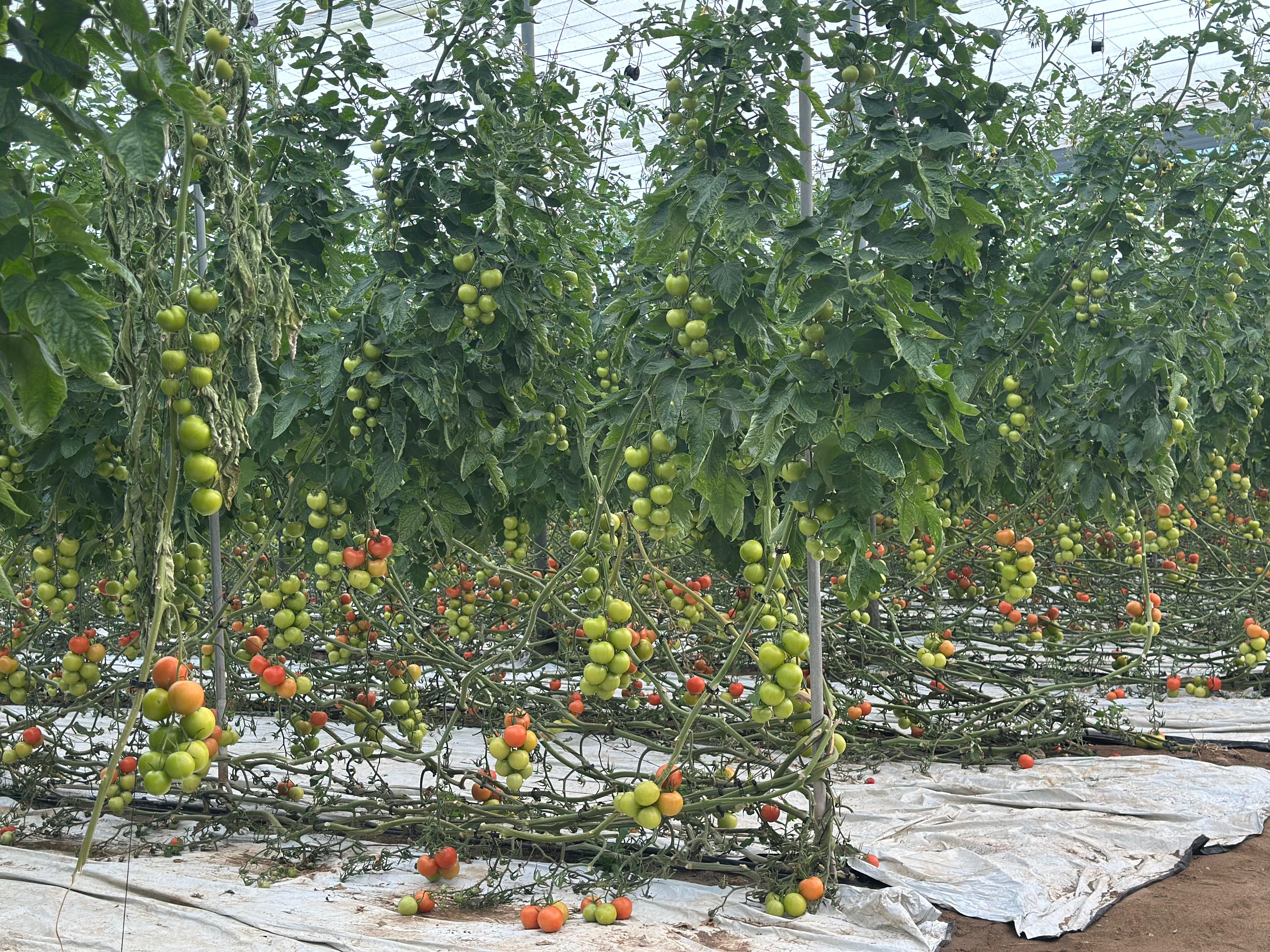
Soilless cultivation is a popular horticulture trend among global first-time growers. A recent study on agriculture found that more than 4.8 billion hectares of land across the world is used for cultivation. Soilless farming occupies about 95,000 hectares. The prevailing scenario depicts that soilless farming accounts for much less than 0.01% of the available and allotted global agricultural land. However, here’s a fact that should draw your attention – soilless farming is the primary choice and highly preferred production method involved in many state-of-the-art greenhouse cultivation farms that focus on yielding lucrative tomato crops. Moreover, it is to be noted that among other growing substrates, growers choose coco coir for the many benefits it provides – eco-friendliness, sustainability, water-holding capacity, root-zone control, and aeration, to list a few. Hence, it’s safe to denote that soilless farming using coco coir substrate is quite common in commercial greenhouse tomato production worldwide with special preference in countries like Canada, Spain, Netherlands, etc. Tomatoes can be aptly attributed as the world’s leading greenhouse crop that accounts for about one-third of global greenhouse vegetable production.
Growers prefer coco coir substrate for tomato cultivation. But why?
Let’s discuss the agronomic advantages coco coir offers in tomato cultivation because of which it has become farmers’ first and ultimate choice.
Water retention and porosity: One of the most important physical properties of coir is the capacity to hold 6-10 times its weight in water. Coir is a medium with ~80% total porosity, meaning the substrate is highly porous and can hold both air and water. It can hold about 40% water for the crop’s roots. This forms a substantial water reserve for the plant. 13% of the medium’s pores are air-filled which implies the material can hold a considerable amount of air (oxygen) available for the roots after watering and drainage for the plant to respire and grow. Deficiency of air can cause the roots to suffocate. Thus, coir provides an unmatched air:water balance for crops. It can hold high levels of moisture and is a reliable source of moisture but doesn’t cause waterlogging and suffocating the roots. This aspect results in robust root growth – crisp white roots with little or no browning. Farmers confirm observing consistent and uniform dry-back cycles, i.e., in between the various watering batches, the medium drains quickly yet retains high level of oxygen (available for the root system), favouring flower set and preventing stress-related issues such as blossom-end rot. Tomato crops need both water for nutrient uptake and oxygen for healthy root growth. Thus, this physical property of coir provides an ideal root-growth environment.
pH and EC management: Natural pH in the range of 5.5 – 6.5 is a characteristic of high-quality coir. This is a time-tested agronomic methodology that supports good tomato nutrition. Professionally engineered coir like that from Gro-Med by Vaighai gives growers the edge. Firstly, the coir is industrially treated – it is thoroughly washed. At this stage, the excess soluble salts from the coir such as K+, Na+, and Cl- are completely flushed out. This results in low EC (often <1.0) before it is used as a substrate. After coir is used for planting, its pH should be managed like that of any peat-based growing media. If alkaline water is used for irrigation (water containing bicarbonates) then farmers often add nitric acid to neutralize the water. Moreover, for ideal crop (tomato) growth, a slightly acidic nutrient solution is given to the crop to maintain the much-required 5.8-6.2 pH in the root zone.
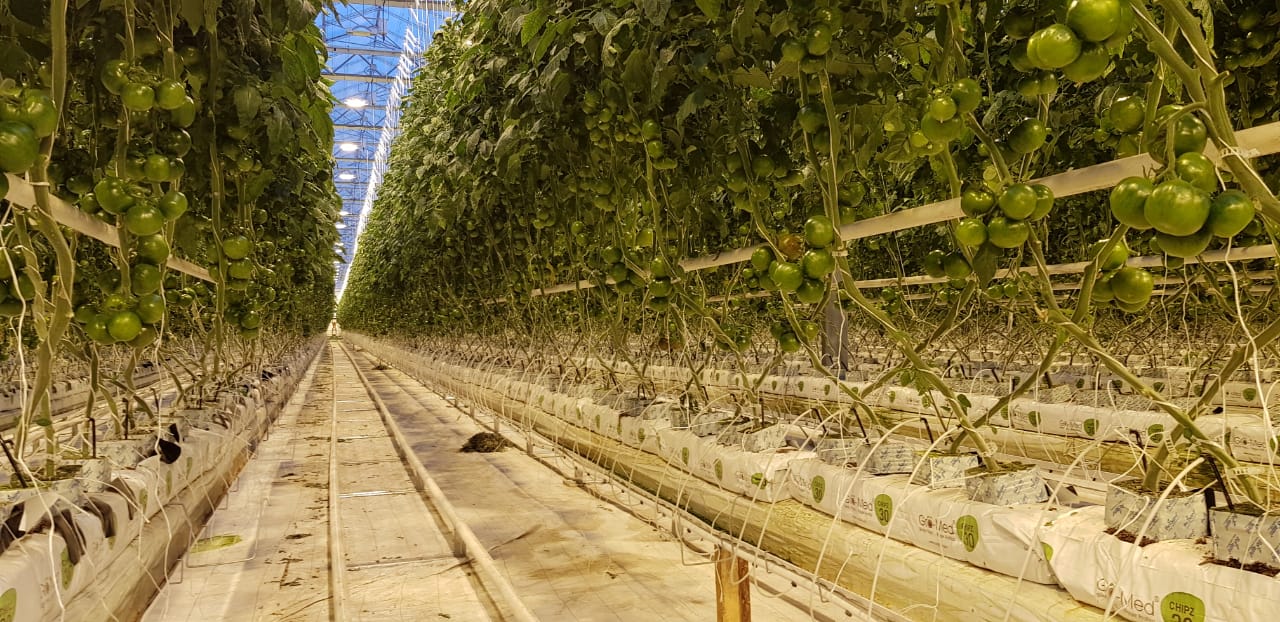
A Tomato Greenhouse Growing in Gro-Med Coir Grow Bag
CEC: Coco coir’s Cation Exchange Capacity (CEC) is high; this chemical characteristic of the material gives it a major advantage as it paves the path for maximum nutrient uptake. CEC is the substrate’s ability to attract, hold, and exchange nutrient ions like Ca2+ – calcium, Mg2+ – Magnesium, and Potassium – K+, i.e., ions that are positively charged. With higher CEC, coir can retain essential nutrients with ease within the crop’s root zone thus, making these indispensable nutrients readily available to the roots as and when needed resulting in robust root development, healthier crop growth, and enhanced crop performance. Coir can consistently supply both macro- and micronutrients to the plants because of its high CEC.
Natural disease prevention and control: Coco coir is free from soil-borne pathogens as it is processed, triple-washed, lab tested before it is engineered into a horticultural substrate. It gets a big boost because of its fibrous structure that thwarts root diseases such as Pythium and Fusarium. This physical attribute ensures the roots get sufficient oxygen to respire and grow. Furthermore, it is highly resistant to compaction, thus, significantly cutting down the risk of root diseases. By contrast, re-used soils harbour a host of disease-causing pathogens. Various studies have concluded, growers obtain a healthier root environment for their tomato crops when new coco coir is used as the growing medium. First-use coir naturally supports vibrant root growth and simultaneously reduces the risk of crop diseases especially in the seedling and early crop development phases.
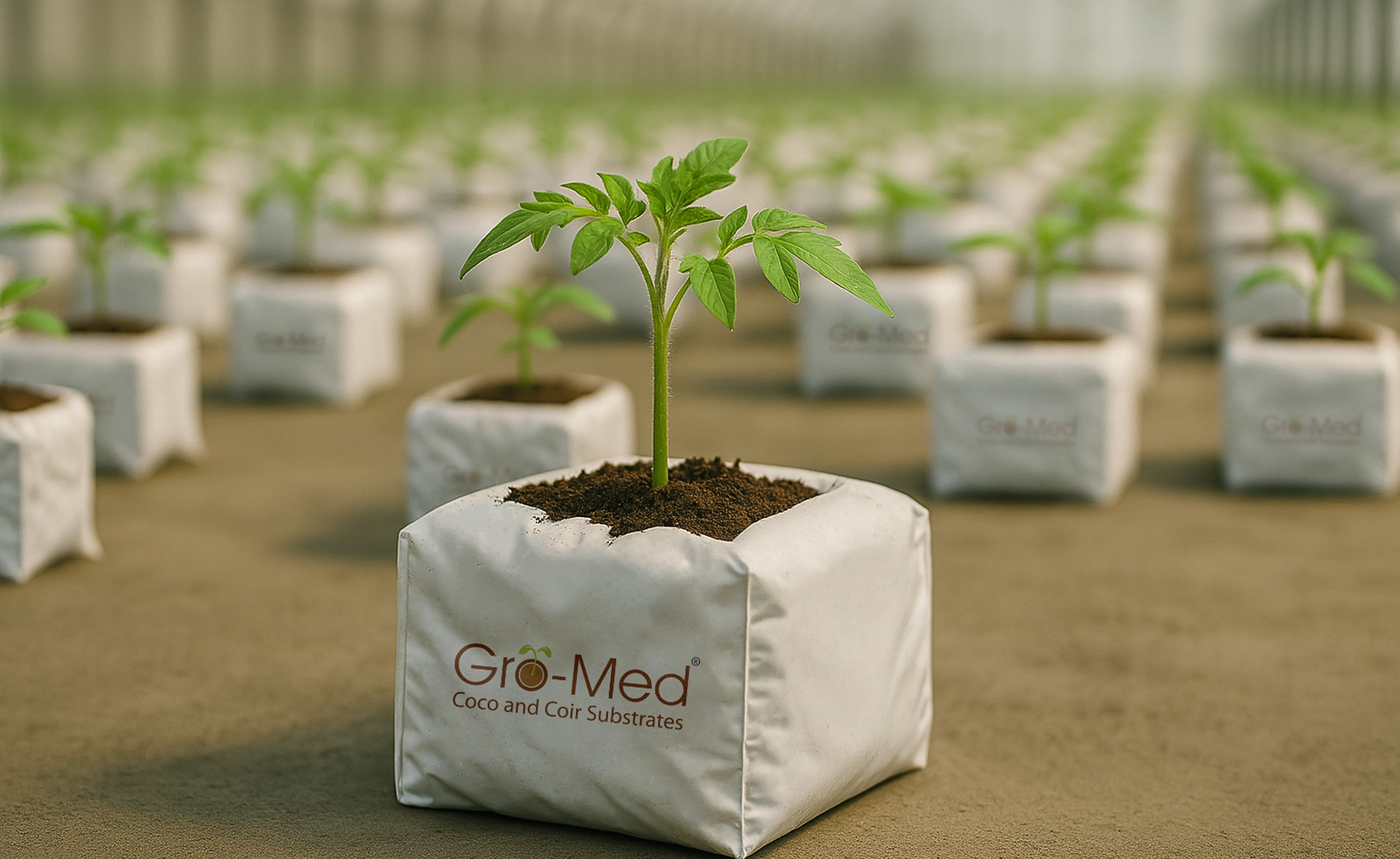
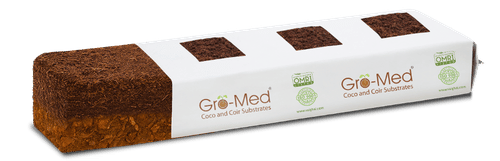
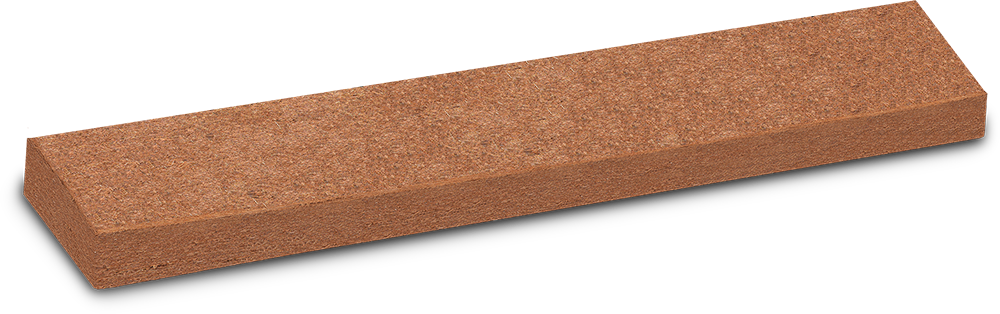
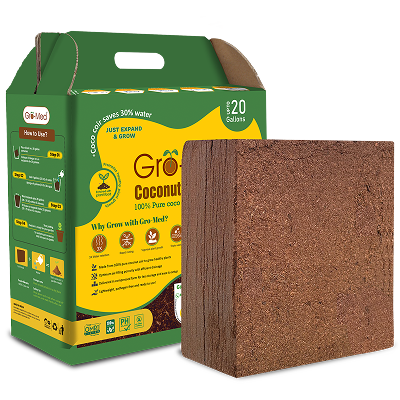
Clean, consistent, and stable substrate: Farmers that have switched to coir are happy with the outcome which is a stable root environment fuelling their crop’s growth and yield. It is observed that coir is more uniform than most other substrates. Coco coir and related products exported from India are in high demand in the international market because their textures are highly consistent (unlike compost and field soils). When coir is deployed in farms as the growing medium, farmers report uniformity in fruit clustering as well as crop ripening. Global horticulture brand like Gro-Med have engineered high-quality and personalized coco coir products such as lay flat coir grow bags and coir slabs that enable growers to implement farmer-friendly and pro-crop irrigation strategies. Coco coir products’ biggest advantages are their characteristics related to watering such as water retention and sufficient drainage. These factors qualify coir as the best substrate pertaining to irrigation management and crop health as well as growth.
Eco-friendly and sustainable: It’s a well-known fact that coir is a renewable, eco-friendly, and organic by-product of the coconut industry. It’s the waste that is obtained from coconut husks. Coir is a substrate with the most stable physico-chemical properties. It can be easily reused for 2-3 crop cycles without affecting crop growth and yield quality (with sterilization between crops). When a grower no longer wants to reuse it then he can compost or reincorporate the substrate.
Presently, a whopping 12+ million metric tons of coco coir are traded in a year globally, keeping in mind the rising demand of the horticulture industry. This point implies not only its popularity but also its wide adoption across the world promoting clean and sustainable growing systems.
Industry best practices:
Let’s delve into the practical details and discuss how growers can make the most of the deployed coco coir substrate in their farms.
Commercial growers adopt a Dutch nutrient formula that’s infused into tomato cultivation via fertigation for a high-quality, robust yielding, and nutrition-dense crop. The Dutch fertigation recipe comprises high levels of phosphorus (P) for root development and flowering, potassium (K) aiding in high-quality fruit development, nitrogen (N) that facilitates optimum vegetative growth, along with adequate amounts of calcium (Ca) and magnesium (Mg).
When coir is the substrate in one’s farm, growers can get creative by devising various irrigation strategies that best suit their needs and circumstances. This approach is possible as coco coir handles the chapter of watering and drainage in cultivation exceptionally well. This medium drains efficiently. A study reveals that tomato growers harvested robust crops when they implemented short but frequent irrigation routines. This allowed for moistening the roots several times a day along with proper drainage without causing waterlogging.
A Canadian farmer irrigates his crop at night to prevent evaporation loss. He confirms complete dry-back by the following afternoon. This helps in flower production and nips unnecessary lush vegetative crop growth in the bud.
Other methods in practice: To enhance the qualities of coco coir as a substrate, it’s a common practice among farmers to blend it. A mix of coarse coir chips and fine coco peat is known to enhance the medium’s aeration and drainage capabilities. There is an emerging trend where Trichoderma, a beneficial microbe is added to result in superior root health as well as thwart various diseases. A new batch of crop may require an additional fertigation routine as coco coir originally carries inadequate amounts of nitrogen. When reusing coir as the substrate for consecutive 2-3 crop cycles, it’s advisable that the medium should be sanitized thoroughly after it has been used to raise a crop. This is a sound practice that prevents disease transmission between crop cycles.
Case studies:
In this section we present a few case studies from around the world that give us insight into how commercial growers benefitted either by choosing coco coir outright over other substrates as their growing medium or switching to it.
Greenhouse in Maharashtra, India: A small tribe of local Maharashtrian farmers who worked in silos were encouraged to undertake a cultivation experiment. This required them to use Dutch-style coco coir grow bags to raise a tomato crop instead of opting for the traditional method involving soil. The farmers who used coco coir for the first time were surprised by the results of the crop raised on coco coir. The coir output outperformed that obtained from the traditional crop. The farmers realized when coir is used as the substrate, the crop requires much less irrigation owing to coir’s excellent water-retention capacity. This property of coir is a boon for growers hailing from water-scarce areas. Other notable facts reported by the farmers are high-quality and increased yields, uniform and larger fruits, and enhanced shelf life of the harvest. These factors can be attributed to coir’s capacity to supply nutrition to the crop in a stable fashion. This success story proves coco coir is the go-to substrate when growers strive for higher productivity as well as resource efficiency.
Netherlands (Van den Berg, The Valley coop): A commercial tomato farm spread across 3 hectares switched to coco coir from rockwool. The first coir yield wasn’t much different from that of rockwool. However, growers recorded about 7% higher production in the second season of the crop. The farm’s management attributed the higher yield to coir supporting robust root development of the crop with stable root-zone conditions and adequate oxygen supply. The farm recorded less energy consumption as coir warms up relatively fast in the morning sun. An additional advantage was the fact that coir didn’t generate any waste. So in every sense, coir is considered a superior substrate to rockwool by the farm.
Coir crop in greenhouse, Mexico: Mexican farms reported an incredible tomato yield of 70 kg/m2 per season (about ten times higher than) achieved when crops were raised using coco coir as the substrate (grow bags) in advanced hydroponic production systems combined with fertigation to that of field cultivated soil-based production. This method proved coco coir to be the ideal growing medium for large-scale indoor commercial production for the following reasons – coir in hydroponic systems redefined sustainability by utilizing less water for the crop, increased yield, and requiring less land for cultivation. This process was designed with closed-loop drip irrigation which implies the growing medium efficiently captured and reused drainage water. Overall, a very affordable and effective tomato production method.
UNISA, Johannesburg, South Africa: Horticulturists affiliated with the University of South Africa conducted a cultivation trial involving different variants of coconut coir in 2021-22. The experiment involved transitioning tomato seedlings to two variations of coir – one with 28% air-filled porosity and the other with 33% in a greenhouse. The yields were compared to that of a crop raised on loam soil (AFP (air-filled porosity) 17%). The researchers’ findings are interesting – plants with 28% aeration produced more fruits per plant compared to those grown on soil. Fruits from the yield on 33% AFP coir were found to contain significantly higher lycopene content (87 mg/100g). Lycopene is an important antioxidant that is associated with several health benefits. The inference of this study was simple – when coir is the substrate chosen for tomato crop, the produce is much higher and is more nutrient-dense in quality. Hence, the growing medium directly impacts yield size and fruit quality.
Houweling’s greenhouse operations (Netherlands & North America): Houweling’s is a successful commercial brand that operates across North America with a significant presence in Canada. The company produces premium tomatoes via its large-scale greenhouse production facilities that deploy cutting-edge Dutch technology. The farm made headlines when it annually harvested a robust yield of about 108 million lb (≈49,000 t) of vine-ripe tomatoes through soilless cultivation method. Hydroponic systems with coco coir grow bags along with computer-controlled fertigation resulted in such a massive yield. This mechanism benefited the farm multi-fold. Farmers obtained increased yield per unit area. They could also save a substantial amount of water during irrigation as the system could efficiently capture and recycle more than 90% of irrigation water and carbon dioxide. This scenario depicts how deploying coir in hydroponic systems is directly proportional to enhanced resource efficiency, robust crop, increased productivity, and also it redefines sustainability in terms of commercial greenhouse production operations.
Conclusion: In our closing thoughts, we would like to mention that there is no “magic bullet” when it comes to choosing a growing medium for one’s farm. However, it is also worth mentioning that when tomato production is involved in the cultivation equation, coconut coir has outperformed other substrates such as peat moss, rockwool, perlite, compost, and soil. These observations are backed by research, technical data, and industry sources.
Industry, academia, and the global growers’ fraternity prefer coir for their tomato crops as this method is highly reliable and produces more uniform, robust, and nutrient-dense fruits. It is also an eco-friendly medium that increases sustainability by significantly reducing a farm’s carbon footprint, chemical runoff, can be reused multiple times, and doesn’t require special treatment before being discarded. Many governments today strongly suggest coco coir for their countries’ commercial production, especially Europe, Japan, and other regions. Furthermore, it provides multi-fold benefits to the growers like higher yield, disease prevention, superior resource management, compatibility with modern growing systems, portability, making transportation more cost-effective, to name a few.
Happy growers’ quotes like “plants don’t panic anymore” and “roots recover faster after heat” show coir’s popularity in the horticulture world as a go-to growing medium for premium tomato production.
It is also important to note that despite coir’s numerous strengths and the countless benefits it offers, it requires careful preparation. It’s advisable to use professionally engineered coconut coir products for raising crops. Gro-Med Coco & Coir Substrates from Vaighai is a trusted global brand that has catered to the global horticulture market with its tailor-made and customized range of coco coir products. To know more, reach out us today