.png)


Get A quote
Get A quote
.png)
A coir grow bag is more than a water-holding medium. It is the root environment that growers must manage throughout the crop cycle. Its performance depends not only on how much moisture it retains, but also on how effectively it maintains air space, distributes water and holds its structure. Within that balance, fibre has an important role to play.
The fine strands running through a coir blend are not simply leftover material from coconut processing. When selected, cut and blended appropriately, they contribute to the physical structure of the substrate. However, the objective is not to include as much fibre as possible—it is to use the right amount, in the right form, for the crop and irrigation system.
Coconut husk provides three main components used in horticultural substrates: pith, fibre and husk chips. Although they come from the same raw material, each contributes differently to the growing environment.
These components work together. A grow bag’s behaviour comes from their proportions, particle sizes and distribution—not simply from the fact that it contains coco coir.
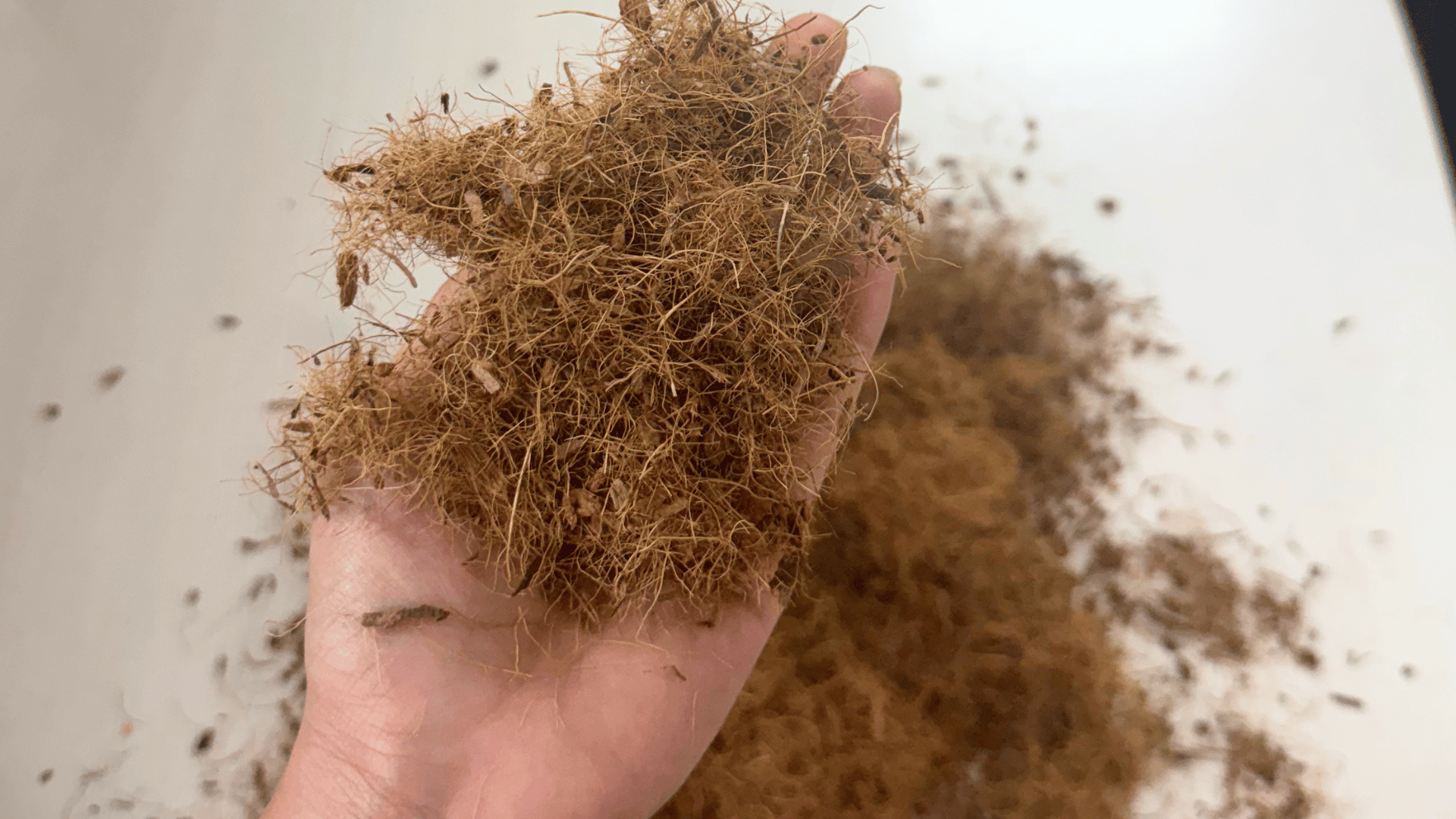
A substrate can hold plenty of water and still provide an unsuitable root environment if too little air remains after irrigation. Air-filled porosity—the proportion of substrate volume occupied by air after gravitational drainage—is therefore an important measure of growing-media performance.
This is where the physical structure of a coir blend matters. Properly incorporated fibre can help resist compaction and preserve spaces within the substrate. Those spaces contribute to the balance between retained moisture and air available around the roots.
For growers, the benefit is not simply “a looser-looking bag.” It is a substrate structure that supports the intended irrigation strategy without relying on water retention alone.
A grow bag must do more than expand correctly on planting day. Its physical structure also needs to remain suitable as production continues.
Coir fibres are tough, lignin-rich plant materials. Their resistance to breakdown and their ability to retain shape can help support an open substrate structure over time. This makes fibre a useful part of blends where resistance to settling and compaction is important.
That does not mean fibre prevents all structural change. Substrate longevity depends on the complete formulation, and coarse husk chips generally offer greater structural persistence than coco coir or fibre during extended production cycles. Fibre should therefore be considered one part of the structural design, rather than a guarantee that a grow bag will remain unchanged indefinitely.
Fibre is often discussed only in relation to aeration, but its role in moisture distribution is equally relevant.
RHP, the horticultural substrate quality organisation, identifies short-cut coir fibres as a component mainly used to improve water distribution within substrates. In a well-prepared blend, these fibres complement the moisture-holding function of the pith.
An important distinction follows: helping distribute water is not the same as storing large amounts of it. Fibre itself has relatively low water-holding capacity compared with coco. Its value lies in how it works within the overall blend—not in replacing the water reserve supplied by finer coir material.
This is why fibre length and mixing quality matter. Excessive or poorly distributed long fibres can create pockets with poor moisture distribution, rather than producing the uniform root environment growers want.
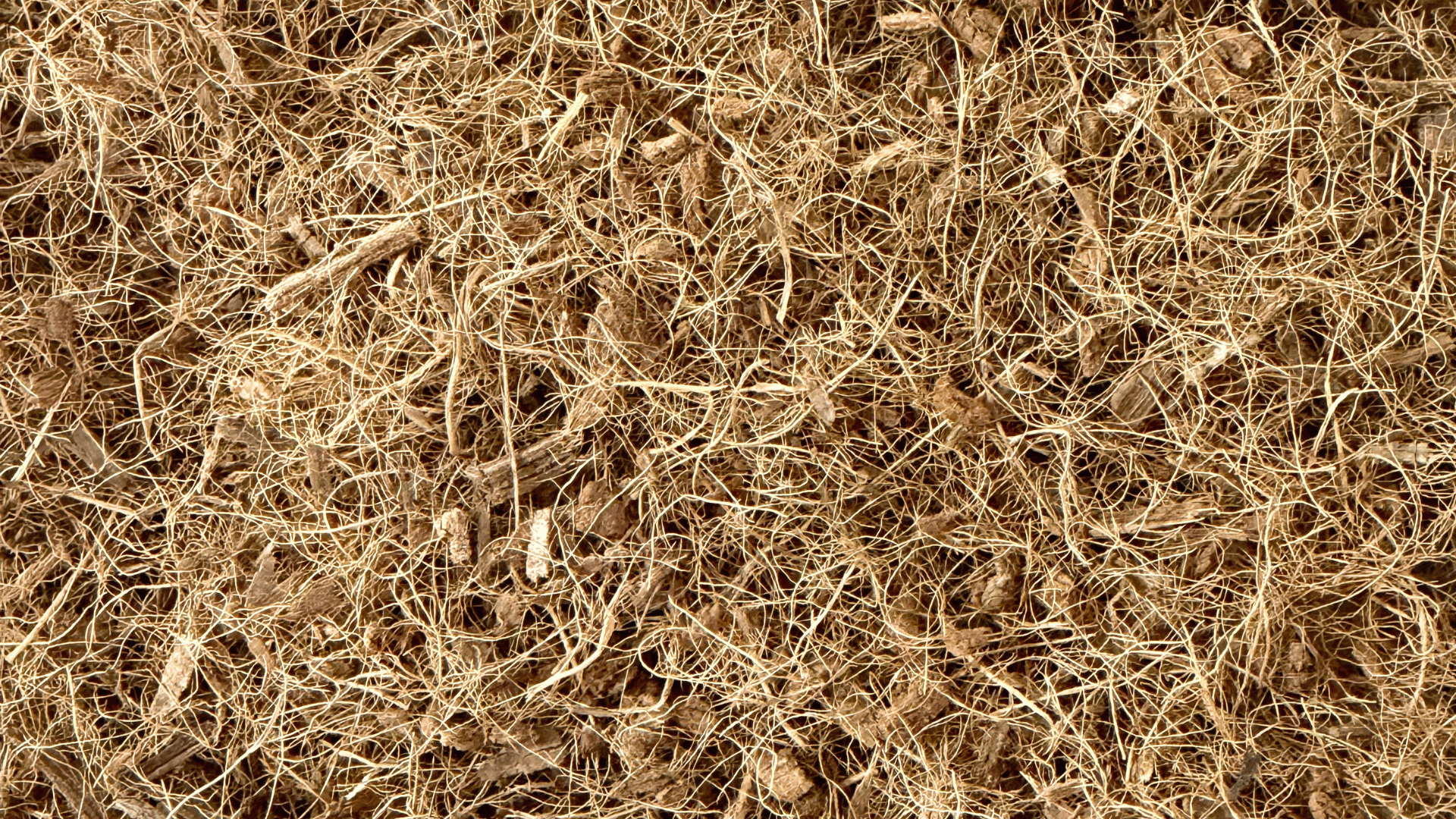
A visibly fibrous substrate is not automatically a better substrate.
Increasing the fibre fraction changes the relationship between moisture retention, air space and irrigation requirements. A blend with too little water-holding material may provide less moisture reserve between irrigation events. Equally, fibre that is too long or unevenly incorporated can undermine uniformity.
The correct question is therefore not, “How much fibre does this grow bag contain?”
It is, “What does this fibre contribute to the performance of the finished blend?”
A suitable formulation must retain enough water for the chosen irrigation frequency while maintaining adequate air space. That balance needs to reflect the crop’s requirements and the production system, rather than a universal fibre percentage.
Assessing fibre content is most useful when it forms part of a wider discussion about substrate performance. Growers should ask:
These questions move the discussion beyond appearance and towards the properties that influence root-zone management. Coir formulations can be adjusted through their pith, fibre and chip proportions, but the resulting air–water balance is what ultimately matters to the grower
The value of fibre in a coir grow bag is its contribution to a balanced substrate: supporting structure, helping maintain air space and assisting moisture distribution. Used appropriately alongside pith and chips, it gives manufacturers another way to tailor the growing medium to a crop and production strategy.
Every growing system has different demands. At Gro-Med, we help you choose a coir blend that balances water retention, aeration and structure around your crop and irrigation needs.
Planning your next crop cycle? Talk to our team about a blend that works for your growing system.


.png)
.jpg)

.svg)
.png)