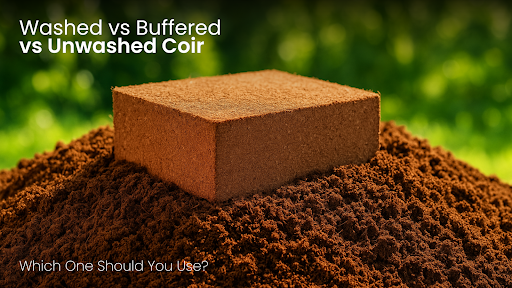
Washed vs Buffered vs Unwashed Coir: Which One Should You Use?
Coco coir is a versatile growing medium widely used in hydroponics, open field farming, and agriculture due to its excellent water retention, aeration, and sustainability. However, not all coco coir substrates are the same. One of the biggest differentiators you’ll come across is whether the coir is washed, buffered, or unwashed. If you’re a grower wondering which one to choose, this guide breaks down the differences, pros and cons, and ideal applications.
1. Understanding the Basics
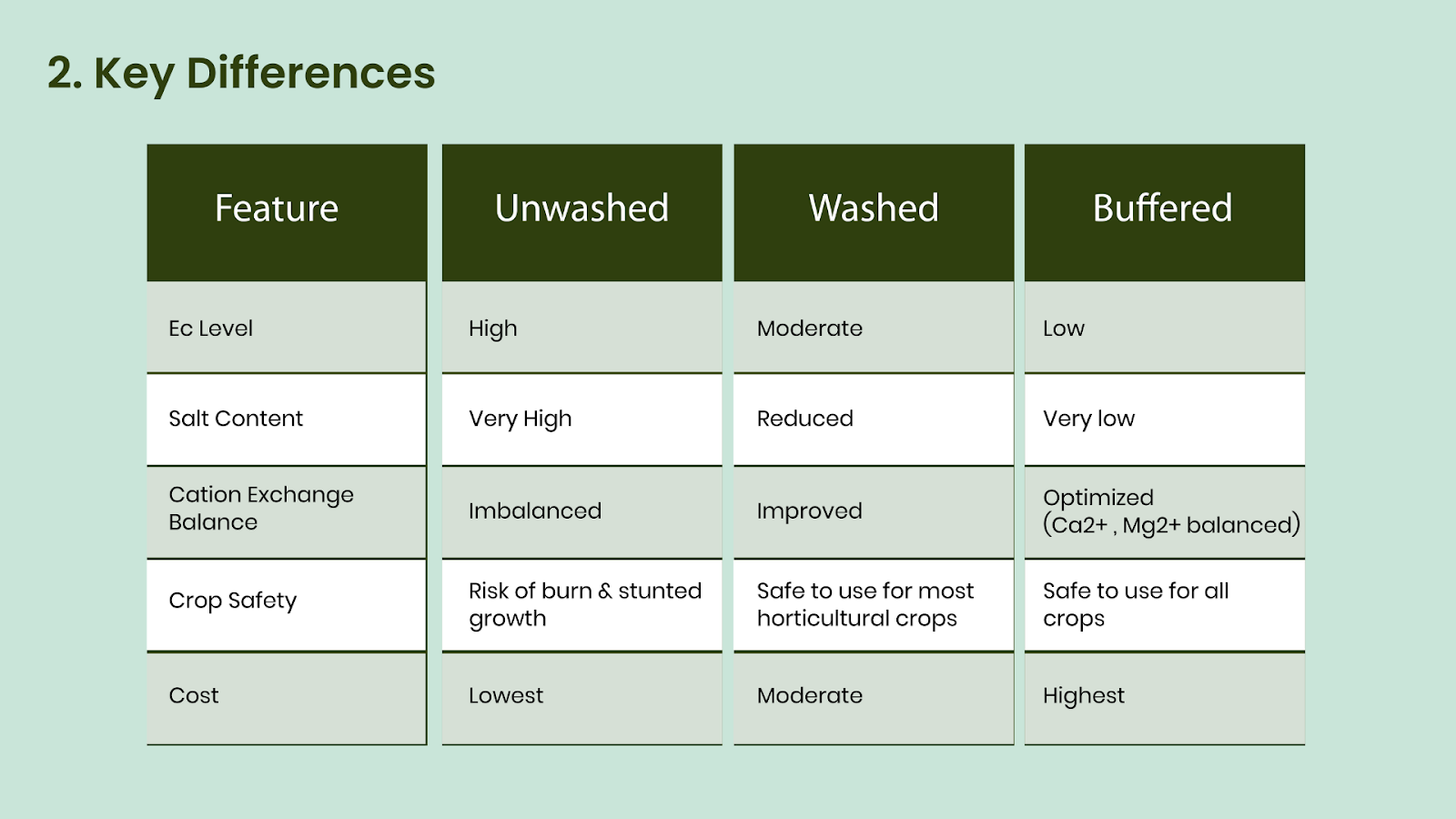
Unwashed Coir Freshly processed coir that hasn’t undergone any washing or treatment. It still contains natural salts and residues (mainly sodium and potassium), which can affect plant growth if not handled properly
Washed Coir Coir that has been rinsed with clean water to reduce excess salts and dust. Washing lowers the electrical conductivity (EC), making it safer for plants
Buffered Coir Coir that has not only been washed but also treated with calcium nitrate to replace sodium and potassium ions with calcium and magnesium. This process prevents nutrient lockout and ensures stable growth conditions.
3. Which One Should You Use?
Unwashed Coir Unwashed coir is the most economical form of coco substrate, purchased mainly for applications where high salt content is not a concern. Primary buyers include landscapers working on non-sensitive land and compost producers. Some large-scale substrate manufacturers also prefer unwashed coir, as they have the facilities to wash it themselves before blending it
Washed Coir Washed coir with EC below 0.5 mS/cm is considered safe for most horticultural crops, as harmful salts are effectively removed. At Vaighai, we use 3X Pure Wash Technology — a three-stage washing system that eliminates salt, dust, and fine particles. The result is clean, consistent, and grower-ready coir trusted by professionals worldwide
Buffered Coir Buffered coir ensures stable nutrient uptake, consistent pH, and protection against sodium/potassium toxicity. It is highly recommended for hydroponics, commercial greenhouses, and high-value crops like cannabis, berries, and leafy greens. While buffered coir is more expensive, many growers choose washed coir and buffer it themselves to balance cost and crop safety.
4. Practical Considerations
Crop Type – Sensitive crops (berries, cannabis, leafy greens) need buffered coir. Less sensitive plants (ornamentals and some herbs or vegetables) can use washed coir.
Budget – If cost is a major factor, washed coir offers a balance between safety and price.
Consistency – Buffered coir provides the most reliable results batch after batch, reducing crop loss risk.
Choosing between washed, buffered, and unwashed coir ultimately comes down to your crop requirements, budget & substrate preparation capacity.
For professional growers aiming at high yield and consistent quality at a reasonable cost: choose Washed Coir.
For budget-conscious buyers who can handle washing and processing: Unwashed Coir works.
For highly sensitive crops such as medical cannabis and berries: Buffered Coir is the safest choice.
By matching the right coir type to your crop needs, you ensure healthier plants, higher yields, and more profitable harvests.
Pro Tip: Choose Gro-Med Coco & Coir Substrates — available in Unwashed, Super-Washed, and Ultra-Washed grades, tailored to meet every grower’s need.
🌱 Connect with us and get substrates tailored to your crops. Discover more at vaighai.com
.png)


.svg)