.png)


Get A quote
Get A quote
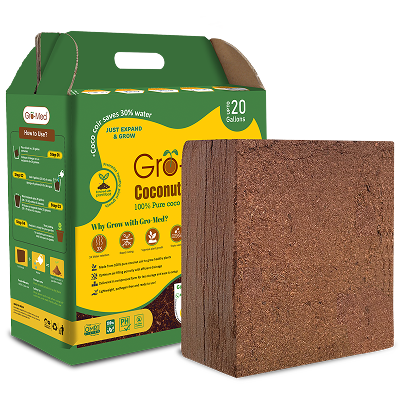
If you run a commercial greenhouse, nursery, or large-scale hydroponic operation, the growing media you choose directly impacts your yield, crop quality, and bottom line. Coco coir has become one of the most sought-after growing media in professional horticulture — but not all coco coiris created equal.
Sourcing low-quality coco coir can lead to pH instability, salt toxicity, poor drainage, and significant crop losses. For commercial growers, these aren't minor inconveniences — they're costly, season-ending disasters.
This guide breaks down exactly what to look for when sourcing coco coir for commercial use, so you can make a confident, informed purchasing decision that protects your operation and maximises your investment.
💡 Pro Tip: In commercial horticulture, your growing media is the foundation of every crop cycle. Cutting corners here can cost you far more than you save.
Coco coir is derived from coconut husks — a byproduct of the coconut processing industry. While this makes it a sustainable, renewable resource, the processing methods, sourcing regions, and post-processing treatments vary widely between suppliers.
Here's what drives the variation in quality:
• Processing method: How the coir is rinsed, aged, anddried affects salt content and particle consistency.
• Source region: Coir from India, Sri Lanka, and the Philippines can vary significantly in fibre quality, EC levels, and moisture retention properties.
• Particle grading: High-quality coir separates fibres,chips, and pith into consistent grades; low-grade coir is mixed and unpredictable.
EC measures the concentration of soluble salts in the coco coir. Raw coconut husks naturally contain high levels of potassium, sodium, andchloride — salts that are toxic to most crops if not properly removed during processing.
What to look for:
• EC level below 0.5 mS/cm (ideally 0.3–0.5 mS/cm) forcommercial greenhouse use.
• Always ask suppliers for a Certificate of Analysis(COA) showing the EC reading.
• Avoid any coir with EC above 1.0 mS/cm — this signals in adequate washing and poses serious risk to crops.
⚠️ Red Flag: If a supplier cannot provide EC data, walk away. For commercial operations, this is non-negotiable.
Coco coir should have a naturally neutral to slightly acidic pH — ideally between 5.5 and 6.5. This range supports optimal nutrient uptake for most commercial crops including tomatoes, cucumbers, peppers, and softfruits.
What to look for:
• Confirm pH range in the COA — look for 5.5–6.5.
• Ask whether the coir has been pH-adjusted during processing.
• Be cautious of coir with pH readings outside 6.5, as this indicates poor processing.
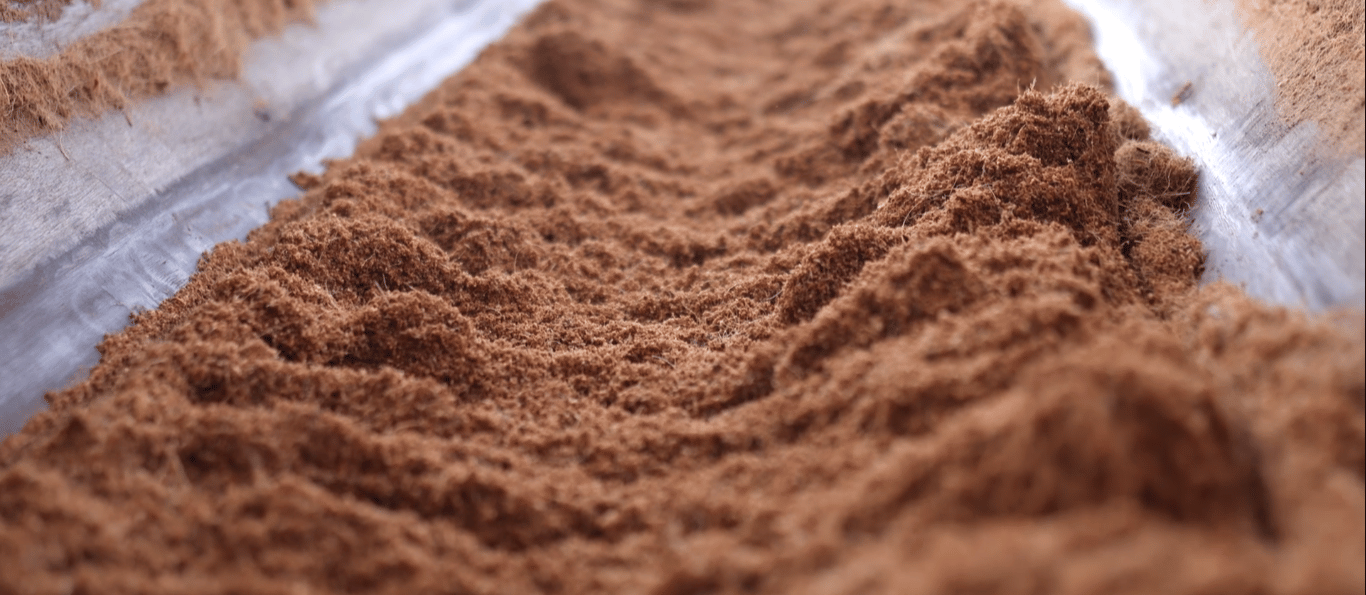
Commercial coco coir comes in several forms — fine pith, medium fibre, and chunky chips. The best suppliers offer clearly graded products, often blended to specific ratios for different crops and irrigation systems.
Standard commercial grades:
• Fine pith (70–80% pith, 20–30% fibre): Excellent water retention — ideal for seedlings and young plants.
• Coarse fibre blend (50% pith, 50% fibre): Balanced drainage and retention — suited for mature crops on drip systems.
• Coco chips/husk chips: High air porosity — commonly used for orchids, certain tropical crops, and as a drainage layer.
What to look for:
• Consistent particle size within each grade — no clumping or excessive fines.
• Ability to specify blends for your particular crop and irrigation setup.
• Suppliers that offer grow bags, slabs, and loose coir in matched grades.
Commercial coco coir should be free of soil-borne pathogens, weed seeds, and heavy metal contaminants. This is especially critical in certified organic operations, export markets, and food-safety-regulated greenhouse environments.
What to look for:
• Ask for pathogen testing results — ideally screened for Pythium, Fusarium, and other common soil pathogens.
• Confirm the product has been heat-treated or steam-sterilised where applicable.
• Check for heavy metal compliance if your produce is destined for export markets with strict residue limits.
• Certifications such as OMRI Listed (for organic use),or ISO-certified manufacturing are strong quality indicators.
Commercial coco coir is typically sold in compressed bricks or blocks, and expands significantly when hydrated. The compression ratio andmoisture content at time of sale affect shipping costs, storage logistics, andease of use at scale.
What to look for:
• Compression ratio: Premium coir should expand to 8–10xits compressed volume.
• Moisture content at shipping: Ideally below 18% for efficient freight, but not so dry that the fibre becomes brittle.
• Consistent block weight and dimensions across batches —important for large orders.
For commercial growers, one-off quality is meaningless. What matters is whether your supplier can deliver consistent quality across every order, season after season.
What to look for:
• Do they process their own coir or source from third-party processors? Direct processors offer better quality control.
• Can they provide batch-specific COAs with every shipment?
• What is their minimum order quantity, lead time, and delivery reliability track record?
• Do they have capacity to scale with your operation?
Before committing to a commercial supplier, use this check list of questions to vet their product and processes:
1. Can you provide a Certificate of Analysis (COA) foreach batch?
2. What is the pH range of your finished product?
3. What certifications do you hold (OMRI, ISO)?
4. Where is the coir sourced and processed?
5. What particle grades are available and how are they tested for consistency?
6. What is your minimum order, lead time, and logistics capability?
7. Can you provide references from commercial greenhouse customers?
8. How do you handle quality complaints or batch inconsistencies?
When sourcing at commercial scale, you'll encounter coco coir in several different formats. Each has specific applications:
The industry standard for commercial tomato, cucumber, pepper, and soft fruit production in greenhouses. Slabs are pre-formed, consistent in size, and integrate directly with drip irrigation systems. Look for slabs with pre-punched holes, and consistent weight
Ideal for potting mixes, nursery stock, soil amendment, andcustom blending. Supplied in large compressed bales. Ensure the supplier can deliver uniform particle grade and EC consistency across bulk orders.
Premium suppliers like Gro-Med can formulate custom coir-perlite or coir-chip blends tailored to your specific crops, irrigation volumes, and climate conditions. This is particularly valuable for high-value crops requiring precise water and air management.
Commercial growers sometimes opt for the cheapest coco coir available — a decision that can prove extremely costly. Here's a realistic look at what poor-quality coco coir can cost your operation:
Hidden costs of low-quality coco coir include:
• Increased pesticide and fungicide use due to pathogen contamination.
• Reduced crop cycles per growing medium — cheap coir degrades faster.
• Inconsistent irrigation performance due to variable particle sizes.
• Yield losses and quality downgrades reducing produce sale value.
Gro-Med Coco Coir is engineered specifically for professional, high-volume growing operations. Every batch is processed, tested, and certified to meet the exacting standards of commercial horticulture.
What sets Gro-Med apart:
• Low EC guarantee: All Gro-Med products are triple-washed and tested to EC levels below 0.5 mS/cm.
• OMRI & ISO certified quality: Our manufacturing and testing processes are certified by OMRI and ISO, ensuring internationally recognized standards for horticultural quality.
• Consistent grading: Tight particle size control ensures predictable water retention and drainage across every batch.
• Full traceability: Batch-specific COAs are available for every order — critical for food safety compliance and export markets.
• Scalable supply: We supply commercial greenhouses, nurseries, and indoor farms at scale, with quick lead times and logistics support.
.png)
Ready to Source Coco Coir That Performs at Commercial Scale?
Request a free sample or speak to our commercial growing team today.
Sourcing the right coco coir for commercial growing is not simply a procurement decision — it's a foundational choice that affects every crop cycle you run. By focusing on EC levels, pH stability, particle consistency, pathogen testing, and supplier reliability, you can identify a growing media partner that delivers consistent, predictable results at scale.
For commercial growers serious about quality and yield, Gro-Med Coco Coir provides the technical assurance, supply chain reliability, and agronomic expertise to support your operation season after season.


.jpg)
.png)
.png)
.jpg)

.svg)

.png)